
Two Phases Transaction
The two-phases transaction flow for the SHVA payment service divides a single transaction into two distinct steps:
- An initial information retrieval phase
- A subsequent authorization phase
This flow is often used by clients who implement a loyalty mechanism, as it allows for user interaction between the two phases, such as canceling or changing transaction values.
Transaction Flow
To understand the 2 Phases transaction flow, consider the following sequence of events:
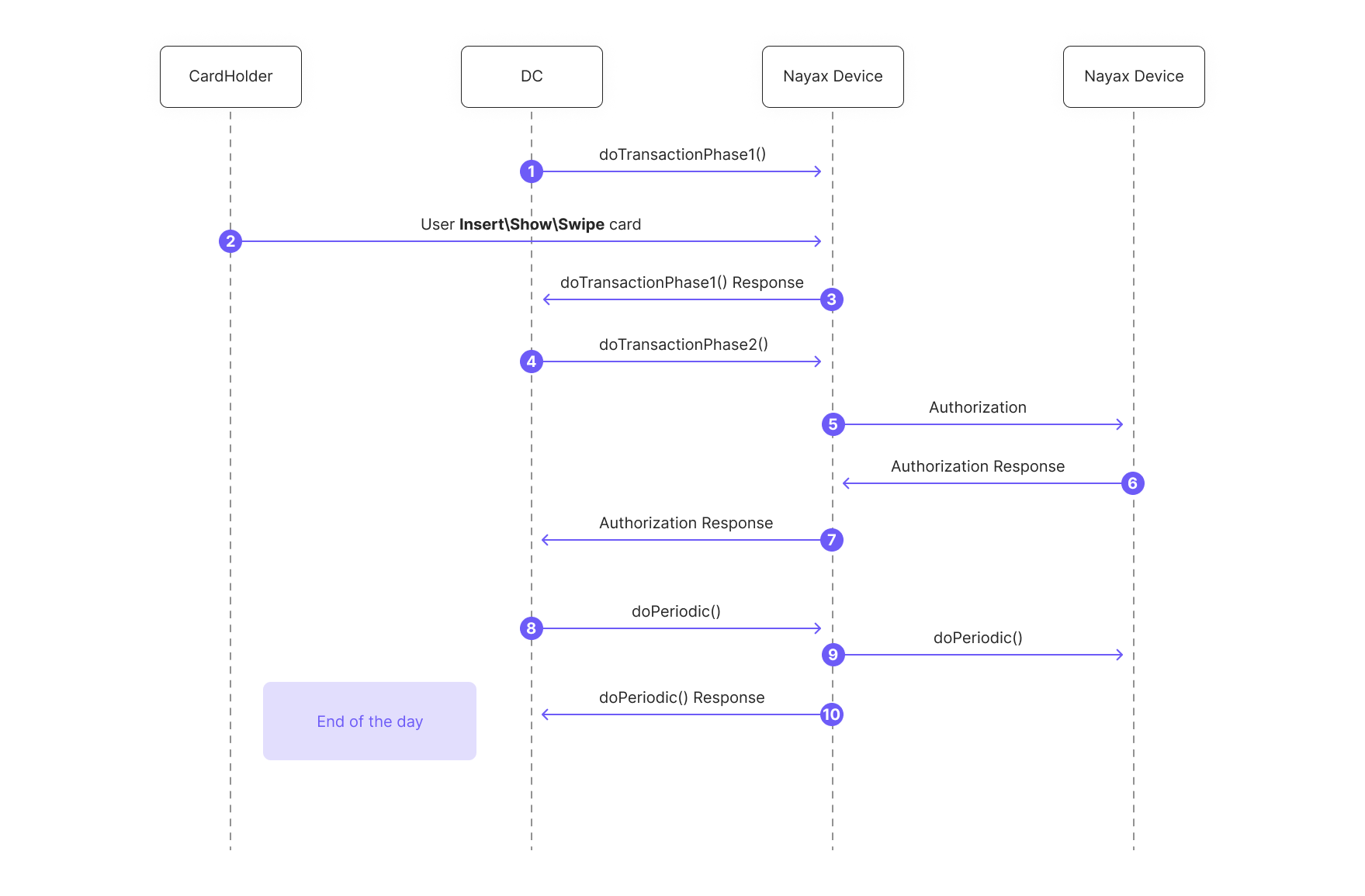
Here's a breakdown of each step:
- The client application (labeled as DC) initiates the first phase of the transaction by sending a
doTransactionPhase1request to the Nayax Device. - The Nayax Device prompts the CardHolder to present their card by either inserting, showing, or swiping it.
- The Nayax Device responds to the DC with a
doTransactionPhase1response, which contains the card and transaction properties. - After any necessary user interaction (e.g., changes or cancellations), the DC sends a
doTransactionPhase2request to the Nayax Device to complete the transaction. - The Nayax Device sends an authorization request to the Payment Server.
- The payment server processes the request and sends an authorization response back to the Nayax Device, which then relays the Authorization response to the DC.
- At the end of the day, the DC sends a
doPeriodicrequest to the Nayax Device, which communicates with the payment server to complete the day's batch process. The Nayax Device then sends adoPeriodicresponse back to the DC.
See Also
Updated 4 months ago